5 Ways Cattle Record Keeping Programs Actually Simplify Your Farm Operations in 2026
See 5 ways cattle record keeping programs simplify farm operations in 2026, from health and breeding logs to inventory tracking and smarter culling decisions.
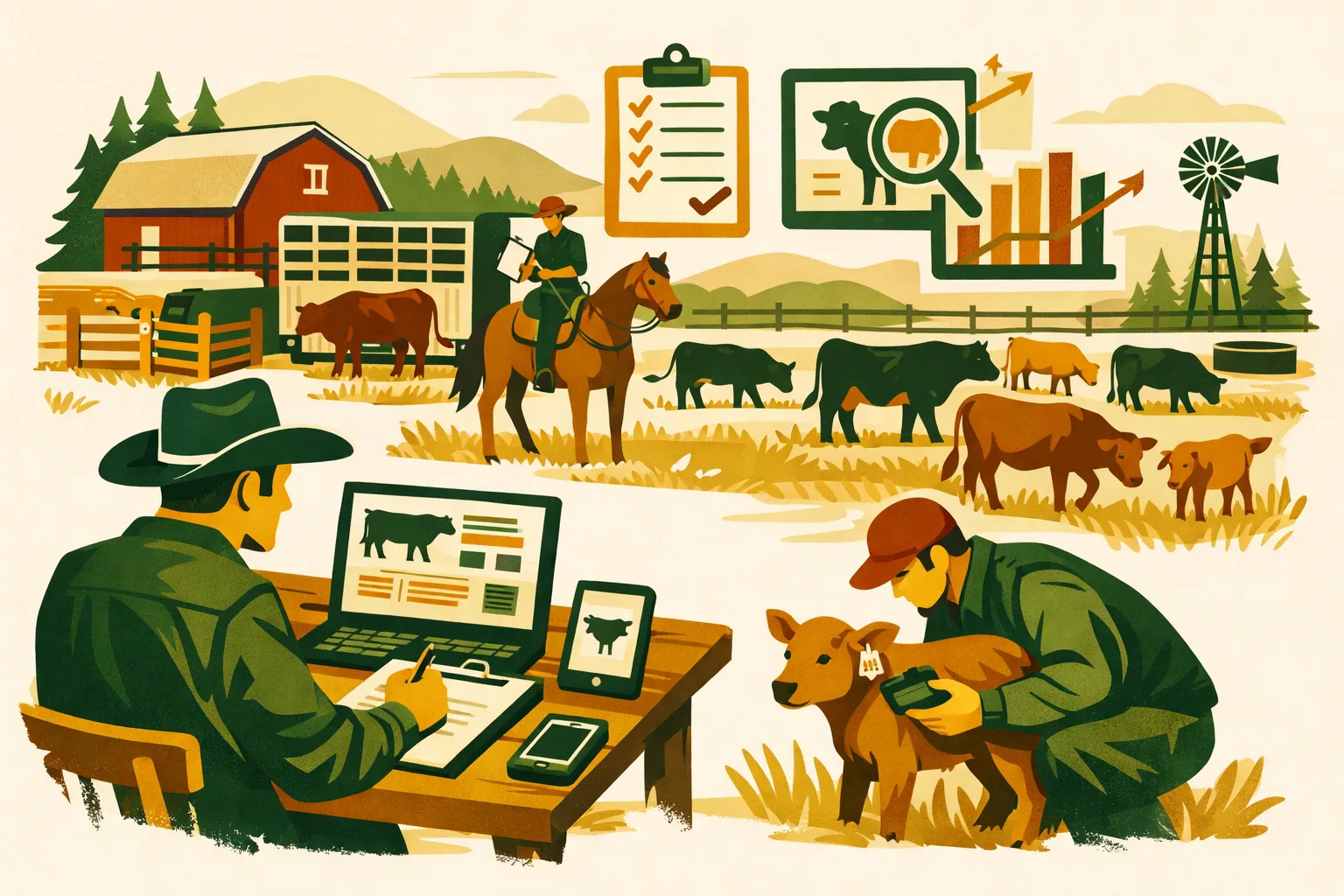
A cattle operation can lose hours every week to the same problems: missing treatment notes, breeding dates written on loose paper, calf records stuck in someone’s pickup, and inventory decisions made from memory instead of facts. The work still gets done, but it takes more labor, creates more mistakes, and makes it harder to know which cows, bulls, and calves are paying their way.
Modern cattle record keeping programs are designed to remove those bottlenecks. The right system does more than store animal IDs. It gives you a working picture of your herd: who is bred, who is open, who was treated, what calves are due to wean, which cows have chronic problems, and where your costs are going.
For commercial cattle producers, the real value is not “going digital” for its own sake. The value is faster decisions, cleaner records, fewer missed tasks, and better control over breeding, calving, health, inventory, and performance data.
Why Cattle Record Keeping Programs Matter More in 2026
Cattle operations are under pressure from several directions: higher input costs, tighter margins, labor shortages, traceability expectations, and the need to make culling and breeding decisions with more confidence. Paper notebooks and spreadsheets can still work for small, simple herds, but they become limiting as soon as more people, pastures, breeding groups, treatments, or ownership groups are involved.
A cattle record keeping program helps centralize herd information so it can be found, updated, and used while decisions are being made.
Common Problems With Paper or Spreadsheet-Based Records
Most cattle producers are not short on effort. The issue is usually that records are scattered.
Common problems include:
- Calving records kept in a pocket notebook but never transferred
- Breeding dates stored in a spreadsheet no one updates in real time
- Treatment records that do not include withdrawal dates
- Cows identified by visual memory instead of consistent IDs
- Weaning weights recorded but never used for selection decisions
- Bull exposure dates forgotten when pregnancy checking
- Purchases, sales, and deaths not reconciled with current inventory
- Pasture moves and group changes tracked informally
- Multiple employees recording the same event differently
These problems create slowdowns. They also create risk. A missed withdrawal date, a misplaced treatment record, or an inaccurate inventory count can cost far more than the time it would have taken to keep the record correctly.
What Good Cattle Records Should Help You Do
A useful cattle records system should help you answer practical questions quickly:
- Which cows are due to calve in the next 30 days?
- Which animals have been treated recently?
- Which calves belong to which dams?
- Which bulls were exposed to which breeding groups?
- Which cows came up open last season?
- Which animals are eligible for sale?
- Which calves have not been vaccinated or processed?
- What is the current herd inventory by class?
- Which animals should be culled based on production, health, or age?
- What is your calving distribution by cycle or month?
If your current system cannot answer these questions without searching through notebooks, text messages, and spreadsheets, a cattle record keeping program can simplify daily operations.
1. They Put Every Animal Record in One Searchable Place
The first way cattle record keeping programs simplify operations is by creating a single source of truth for each animal.
Instead of having identification, health, breeding, calving, and movement records in different places, each cow, bull, calf, steer, or heifer has a complete profile. That profile becomes the foundation for better decisions.
What Should Be Included in an Individual Animal Record?
For cow-calf and seedstock operations, each animal profile should include:
- Visual ID
- Electronic ID or tag number, if used
- Name or management number, if applicable
- Sex
- Breed or breed composition
- Birth date or estimated age
- Dam ID
- Sire ID, if known
- Birth weight, if recorded
- Weaning weight
- Yearling weight, if relevant
- Current status: active, sold, dead, culled, transferred
- Pasture or group location
- Ownership, if multiple owners are involved
- Breeding history
- Pregnancy check results
- Calving history
- Health treatments
- Vaccinations
- Notes and management flags
For stocker and feeder operations, records may focus more on:
- Purchase source
- Arrival date
- Starting weight
- Lot or group
- Processing protocol
- Treatments
- Performance weights
- Death loss
- Sale weight
- Sale date
- Cost basis
The goal is not to record unnecessary information. The goal is to keep the information you will actually use.
Why Searchable Records Save Time
In a paper system, a simple question can take too long.
Example: “Did cow 417 get treated for foot rot last summer?”
With paper records, you may need to check a treatment notebook, a pasture log, and employee memory. With a cattle record keeping program, you search the animal ID and review the treatment history in seconds.
That same time savings applies to:
- Checking vaccination status before turnout
- Confirming a calf’s dam
- Reviewing previous calving problems
- Finding animals treated with a specific product
- Locating cows that were open last preg check
- Reviewing purchases and sales
On a commercial operation, saving even 10–20 minutes per day adds up quickly. Over a year, that can mean 60–120 hours of recovered management time.
Time Estimate: Building Your Core Herd Records
The setup time depends on herd size and the quality of your existing records.
| Herd Size | Starting From Paper Records | Starting From Spreadsheet | Estimated Setup Time |
|---|---|---|---|
| 50 cows | Moderate data entry | Easier import/entry | 2–5 hours |
| 150 cows | More cleanup needed | Manageable with planning | 6–12 hours |
| 300 cows | Requires structure | Best done in batches | 12–24 hours |
| 500+ cows | Plan by groups | May need staged rollout | 24+ hours |
The best approach is to start with active animals only. Do not let old records delay the project. Build your current inventory first, then add historical details as needed.
Practical Setup Tip
Begin with the fields that affect daily management:
- Animal ID
- Sex
- Birth year or age
- Current status
- Pasture or group
- Dam ID for replacement females
- Breeding group or bull exposure
- Last calving date
- Health treatment flags
Once the active herd is entered, add weights, pedigrees, purchase records, and deeper history.
2. They Make Breeding and Pregnancy Records Easier to Manage
Breeding records are one of the highest-value areas for cattle record keeping programs. Reproductive performance drives profitability in cow-calf operations. If breeding records are incomplete, it becomes harder to manage calving seasons, pregnancy checks, culling decisions, and replacement selection.
Key Breeding Records to Track
For each cow or heifer, track:
- Breeding season start date
- Breeding season end date
- Bull exposure group
- AI date, if applicable
- Semen or sire used, if AI breeding
- Heat observation, if used
- Pregnancy check date
- Pregnancy status: pregnant, open, questionable
- Estimated calving date
- Calving outcome
- Calving interval
- Open cow history
For bulls, track:
- Bull ID
- Breeding group
- Turnout date
- Pull date
- Breeding soundness exam date
- Trich test status, where applicable
- Injuries or lameness
- Number of females exposed
- Resulting pregnancy rate by group
This information helps you manage both cow performance and bull effectiveness.
How Digital Breeding Records Improve Decisions
A cattle record keeping program can help identify patterns that are easy to miss on paper.
For example:
- A group of cows exposed to one bull has lower pregnancy results
- Certain cows calve late every year
- Replacement heifers from a specific cow family breed back better
- Older cows are slipping in reproductive performance
- Open cows are concentrated in a pasture, age group, or management group
These patterns matter because reproductive failure is expensive. An open cow still consumes feed, pasture, mineral, labor, and overhead. If you cannot identify her quickly, she may stay in the herd longer than she should.
Calving Season Planning
Good breeding records allow you to forecast calving season before calves hit the ground.
You can prepare:
- Calving pastures
- Labor coverage
- Calf tags
- Colostrum and emergency supplies
- Calving books or app entries
- Vaccine inventory
- Cow nutrition plans
- Replacement heifer monitoring
Estimated calving dates also help you group females by expected calving window. That makes observation more efficient and reduces the chance of missing problems.
Example: Breeding Record Workflow
A practical breeding workflow may look like this:
- Create a breeding group before turnout.
- Assign cows and heifers to the group.
- Assign bull or AI sire.
- Record turnout date.
- Record pull date.
- Enter pregnancy check results.
- Generate expected calving dates.
- Flag open cows for sale or recheck.
- Review pregnancy rates by group.
- Use results when selecting replacements and culling cows.
This process creates a clear record from breeding to calving. It also allows you to compare groups year over year.
Cost Estimate: Missed Reproductive Records
The cost of poor breeding records is not only paperwork frustration. It can show up as:
- Open cows kept too long
- Late-calving cows retained without review
- Bulls with poor results used another season
- Heifers bred too young, too small, or too late
- Calving labor spread across too many weeks
- Replacement females selected without enough dam history
Even one avoidable open cow retained through winter can cost hundreds of dollars in feed, pasture, mineral, and overhead. The exact cost varies by region and feeding system, but the management principle is the same: cows that do not produce a calf need to be identified quickly.
For a field-ready approach to capturing heat dates, AI records, and preg-check results without losing the paper trail, see how to track cattle breeding records without a shoebox of paper.
3. They Keep Health, Treatment, and Withdrawal Records Organized
Health records are not optional operational details. They protect animal welfare, food safety, labor coordination, and market access. Cattle record keeping programs make health records easier to capture at the chute, in the pasture, or during daily checks.
Health Records Every Cattle Operation Should Track
At minimum, treatment and health records should include:
- Animal ID
- Date treated
- Diagnosis or observed condition
- Product used
- Dose
- Route of administration
- Lot number, if available
- Person administering treatment
- Treatment location
- Follow-up date
- Withdrawal period
- Date withdrawal clears
- Treatment outcome
- Veterinarian instructions, if applicable
Vaccination records should include:
- Vaccine name
- Date administered
- Dose
- Route
- Serial or lot number, if practical
- Booster due date
- Group treated
- Animals missed
- Person administering
For guidance on what to log for every vaccination event and how long to keep the records, see livestock vaccination records: what to log and how long to keep it.
For commercial operations, treatment records should be entered as close to real time as possible. A note written on a glove, feed sack, or chute rail is too easy to lose.
Why Withdrawal Tracking Matters
When an animal receives a product with a slaughter or milk withdrawal period, the operation needs a reliable way to know when that animal is eligible for market. A record keeping program can help flag treated animals and prevent them from being shipped too early.
This is especially useful when:
- Multiple people treat animals
- Sale dates are approaching
- Stocker cattle are being sorted for shipment
- Cull cows are being gathered
- Animals are moved between pastures or lots
- Treatment decisions happen outside regular office hours
A missed withdrawal date can create serious consequences. Keeping withdrawal records attached to the individual animal reduces risk.
Treatment History Helps Cull Decisions
Some cattle have repeated health issues. Without organized records, those animals can remain in the herd because each incident seems isolated.
A digital treatment history helps identify:
- Cows with repeated lameness
- Calves with multiple respiratory treatments
- Bulls with recurring foot or injury issues
- Animals that fail to respond to standard treatment
- Chronic pinkeye or udder problems
- Cows with repeated calving difficulty or prolapse
Health history is a strong culling and replacement-selection tool. A cow that raises a calf but repeatedly requires extra labor and treatment may not be as profitable as she appears.
Group Health Events
Cattle record keeping programs are also useful for group events, such as:
- Pre-breeding vaccines
- Branding or processing
- Weaning shots
- Deworming
- Pour-on applications
- Fly control
- Implanting, where used
- Arrival processing for stockers
- Booster schedules
Instead of entering the same event animal by animal, many systems allow group entry. That saves time and improves consistency.
Comparison Table: Paper Health Records vs. Cattle Record Keeping Programs
| Management Need | Paper Notebook | Spreadsheet | Cattle Record Keeping Program |
|---|---|---|---|
| Find an individual treatment history | Slow if records span multiple books | Moderate if data is clean | Fast by animal ID |
| Track withdrawal dates | Manual calculation | Possible with formulas | Easier with animal-level records |
| Record group vaccinations | Simple but limited | Good for lists | Strong for group and individual history |
| Share records with staff | Difficult unless copied | Requires file access | Easier with shared access |
| Review chronic health cases | Time-consuming | Possible with filtering | Easier with animal profiles |
| Use records chute-side | Limited | Awkward on mobile | Designed for field entry |
| Reduce duplicate entry | Poor | Moderate | Strong if workflow is set up well |
The best system is the one your team will actually use during real work. If records cannot be entered near the time of the event, accuracy drops.
Time Estimate: Recording Health Events
A well-designed record keeping process should add very little time to cattle work.
Typical estimates:
- Individual treatment entry: 30–90 seconds per animal
- Group vaccination entry: 2–10 minutes for a group, depending on detail
- Pregnancy check result entry: 5–20 seconds per cow if set up ahead
- Calving entry: 1–3 minutes per calf with dam, date, sex, and notes
- Weaning weight entry: 5–15 seconds per calf if IDs are organized
The time spent entering records usually replaces time previously spent searching, rewriting, or correcting records later.
4. They Improve Inventory, Movement, and Sales Decisions
Accurate inventory is one of the most practical benefits of cattle record keeping programs. Many cattle operations have a general sense of head count, but not always a clean real-time number by class, pasture, age group, or ownership status.
That creates problems during planning, reporting, sorting, hauling, and sales.
What Inventory Records Should Track
Your cattle inventory should show:
- Total active animals
- Cow count
- Bred heifers
- Open heifers
- Bulls
- Calves
- Steers
- Replacement females
- Stockers or feeders
- Animals by pasture or group
- Animals by owner, if relevant
- Purchased animals
- Sold animals
- Deaths
- Culls
- Transfers
Inventory records should be updated whenever animals are born, purchased, sold, moved, culled, or die.
Movement Records Reduce Confusion
Movement records matter when animals are spread across multiple pastures, leases, backgrounding lots, or working facilities.
Track:
- Date moved
- From location
- To location
- Animal IDs or group
- Reason for move
- Person responsible
- Notes on condition or issues
Movement records help answer simple but critical questions:
- Where is cow 812?
- Which calves are in the south pasture?
- Which cows were exposed to bull 64?
- Which animals need to be gathered for preg check?
- Which replacement heifers are still with the main cow herd?
- Which pasture has too many pairs?
This is especially useful when more than one person moves cattle.
Sales Records and Culling Decisions
Cattle record keeping programs help connect sale decisions to actual performance and history.
For each sale animal, track:
- Sale date
- Sale barn, buyer, or private treaty customer
- Sale weight
- Sale price
- Reason for sale
- Pregnancy status, if female
- Health withdrawal status
- Transportation details
- Net proceeds, if tracked
For cull cows, record the reason:
- Open
- Late calver
- Age
- Bad udder
- Bad feet or legs
- Disposition
- Chronic health issue
- Poor calf performance
- Calving difficulty
- Structural problem
- Not raising a calf
Over time, cull reasons show where your herd is improving or where problems are recurring.
Inventory Accuracy Checklist
Use this checklist to clean up your herd inventory before or during setup in a cattle record keeping program.
Active Herd Inventory Checklist
- List every active cow by visual ID
- List every bull by ID and age
- Separate bred heifers from mature cows
- Separate replacement heifers from feeder heifers
- Record calves by dam, sex, and birth date where known
- Mark sold animals as inactive
- Mark dead animals as inactive
- Remove duplicate IDs
- Identify animals with missing tags
- Assign current pasture or group
- Record ownership if animals are mixed
- Confirm pregnancy status for breeding females
- Flag animals pending sale
- Flag animals with treatment withdrawals
- Reconcile physical head count to records
Run this checklist at least once per year, and preferably before major events such as preg check, weaning, or year-end financial review.
How Better Inventory Saves Money
Inventory errors can create hidden costs:
- Buying more mineral or feed than needed
- Underestimating stocking pressure
- Keeping nonproductive females too long
- Missing sale opportunities
- Losing track of leased or custom cattle
- Duplicating treatments
- Sorting the same group multiple times
- Hauling animals that were not supposed to ship
Accurate inventory supports better stocking decisions, feed planning, grazing management, and cash flow timing.
Practical Example: Sorting Cull Cows
Without organized records, culling may rely heavily on memory during preg check or weaning. That can lead to keeping cows that should go and selling cows that deserve another look.
With a cattle record keeping program, you can create a sale list before gathering:
- Open cows
- Late bred cows outside your target window
- Cows over a set age
- Cows with bad udders
- Cows with repeated health treatments
- Cows that weaned light calves
- Cows that required calving assistance
The crew can sort from a prepared list instead of debating each cow in the alley.
5. They Turn Records Into Management Reports You Can Use
The biggest advantage of cattle record keeping programs is not data storage. It is the ability to turn records into management information.
A record has value when it changes a decision.
Reports That Matter for Cow-Calf Operations
Useful cow-calf reports include:
- Current herd inventory
- Calving report
- Calving distribution
- Breeding exposure groups
- Pregnancy status report
- Open cow list
- Calf crop report
- Weaning weights
- Cow production history
- Replacement heifer candidates
- Health treatment history
- Withdrawal status
- Cull list
- Death loss report
- Sales report
These reports help you manage seasonally and compare year over year.
Reports That Matter for Stocker and Feeder Operations
For stocker, backgrounding, or feeder cattle, useful reports include:
- Arrival group report
- Processing report
- Treatment report
- Pull rate by group
- Death loss by group
- Average daily gain, if weights are tracked
- Sale weight report
- Inventory by lot or pasture
- Purchase and sale history
- Health cost per group, if expenses are tracked
These reports make it easier to evaluate sources, groups, management protocols, and marketing decisions.
What to Review Monthly
A monthly cattle records review does not need to be complicated. For most commercial operations, 30–60 minutes is enough if records are current.
Review:
- Current inventory by class
- Recent births, deaths, purchases, and sales
- Animals with open treatment withdrawals
- Upcoming vaccine or booster tasks
- Breeding groups and exposure dates
- Expected calving dates
- Open or questionable females
- Animals flagged for culling
- Pasture or group assignments
- Missing data that needs cleanup
This routine prevents record problems from becoming year-end problems.
What to Review Seasonally
Seasonal reviews should be tied to major production events.
Before Breeding Season
Review:
- Cow body condition notes
- Previous calving date
- Calving assistance history
- Open cow history
- Bull inventory and soundness exams
- Replacement heifer eligibility
- Planned breeding groups
During Calving Season
Review:
- Calves born
- Calving difficulty
- Stillbirths or losses
- Dam behavior
- Udder problems
- Calf vigor
- Tagging and identification status
At Weaning
Review:
- Calf weights
- Dam performance
- Health history
- Calf sex and class
- Replacement candidates
- Cull cow list
- Sale groups
At Pregnancy Check
Review:
- Pregnant vs. open females
- Calving windows
- Bull performance by group
- Late-bred females
- Cows to sell
- Heifers to retain or market
Turning Reports Into Action
Reports should lead to decisions. If a report does not affect management, simplify it or stop using it.
Examples of report-driven decisions:
- Sell cows open at preg check
- Retain heifers from cows with strong production and clean health history
- Remove a bull with poor pregnancy results
- Adjust breeding season length
- Create a tighter calving window
- Change vaccine timing based on health events
- Sort sale calves by weight and sex
- Replace cows with repeated udder or foot problems
- Identify groups with higher treatment rates
- Track which pastures create management bottlenecks
The goal is not to collect every possible data point. The goal is to collect the right records consistently and use them.
How to Choose the Right Cattle Record Keeping Program
Not every cattle record keeping program fits every operation. A seedstock breeder, commercial cow-calf ranch, stocker operator, and small feedlot may all need different levels of detail.
Choose software based on your workflow, not just the feature list.
Core Features to Look For
Look for a program that can handle:
- Individual animal records
- Herd inventory
- Breeding records
- Pregnancy records
- Calving records
- Health treatments
- Vaccinations
- Withdrawal tracking
- Group records
- Pasture or location tracking
- Sales and purchases
- Cull reasons
- Notes and flags
- Mobile access
- Easy search by animal ID
- Reports and exports
If your operation works in areas with limited connectivity, consider how records will be entered in the field and synced later.
Questions to Ask Before Switching Systems
Before adopting new cattle records software, answer these questions:
- Who will enter records?
- When will records be entered?
- Which events must be recorded immediately?
- Which records can be entered later?
- What data do we already have?
- What data do we actually use?
- How will animal IDs be standardized?
- How will missing tags be handled?
- Who reviews reports?
- What decisions should the records support?
The biggest mistake is choosing software before defining the workflow. A simple system used consistently beats a complex system no one keeps updated.
Mobile Access Matters
Cattle records are created where cattle are handled: in the pasture, at the chute, in the calving lot, at the sale barn, or during loading. If records require office entry only, they are more likely to be delayed or forgotten.
Mobile access helps with:
- Calving entries
- Treatment records
- Pasture moves
- Sale notes
- Death loss records
- Tag corrections
- Pregnancy results
- Group processing notes
The easier it is to record an event when it happens, the more accurate your records will be.
Practical Action Plan: Move From Paper to Digital Records
Switching to a cattle record keeping program does not have to be disruptive. Treat it like any other management upgrade: start with the highest-value records, then build from there.
Step 1: Decide Your Record Priorities
Choose the records that matter most to your operation.
For many cow-calf producers, the first priorities are:
- Active cow inventory
- Bull inventory
- Calving records
- Breeding groups
- Pregnancy results
- Treatments and withdrawals
- Sales and culls
For stocker operators, priorities may be:
- Arrival groups
- Processing records
- Treatments
- Death loss
- Weight records
- Lot or pasture movement
- Sales
Step 2: Clean Up Animal IDs
Before importing or entering records, standardize IDs.
Actions:
- Decide whether visual tag, EID, or management number is the primary ID
- Remove duplicate IDs where possible
- Retag missing animals during the next working
- Record cross-references for old tags
- Use a consistent format for new calves
- Avoid changing IDs unless necessary
Good animal ID discipline makes every other record easier.
Step 3: Enter Active Inventory First
Do not try to digitize 10 years of history before using the system.
Start with:
- Active cows
- Active bulls
- Replacement heifers
- Current calves
- Current stocker or feeder groups
Then add:
- Recent breeding records
- Current pregnancy status
- Recent treatments
- Upcoming withdrawal dates
- Current pasture or group
Historical data can be added later if it supports decisions.
Step 4: Train the People Who Handle Cattle
Records fail when only one person understands the system.
Train everyone involved in:
- How to look up an animal
- How to enter a treatment
- How to record a calving event
- How to flag a problem animal
- How to record a death or sale
- How to update pasture moves
- Who to contact if data is missing
Keep the workflow simple. If employees need 15 steps to enter one treatment, the system will not hold up during a busy day.
Step 5: Review Records Weekly During Busy Seasons
During calving, breeding, weaning, and shipping, review records weekly.
Check:
- New calves entered
- Missing dam IDs
- Assisted births
- Treatments and withdrawals
- Animals sold or dead
- Cows needing follow-up
- Pregnancy results
- Sale lists
- Inventory counts
A weekly review can take 15–30 minutes and prevents major cleanup later.
Step 6: Use Reports to Make One Decision at a Time
Start with one management decision.
Examples:
- Build a cull list after preg check
- Identify calves missing vaccinations
- Select replacement heifers
- Review cows that calved late
- Find animals still under withdrawal
- Compare pregnancy results by bull group
When a record keeping program helps make one decision easier, adoption improves.
Common Mistakes to Avoid
Cattle record keeping programs are tools. They work best when the operation has clear expectations and consistent habits.
Recording Too Much Too Soon
Trying to capture every possible data point can overwhelm the crew. Start with records that affect health, inventory, reproduction, and sales.
Add detail later when the basic workflow is reliable.
Letting IDs Become Inconsistent
Animal ID problems create record problems. If the same cow is listed as “417,” “Cow 417,” and “Yellow 417,” reports become less reliable.
Use one primary ID format and stick with it.
Entering Records Weeks Later
Delayed records are usually less accurate. Treatment dates, calving details, pasture moves, and sale notes should be entered as close to the event as possible.
Not Reviewing the Data
Records only create value when reviewed. Schedule regular record reviews the same way you schedule preg check, weaning, or processing.
Keeping Digital Records and Paper Records Separate
Some paper backup is fine, especially during field work. The problem comes when paper records never make it into the main system.
If you use paper chute sheets or calving notes, assign someone to enter them promptly.
Cost and Time Expectations for Cattle Record Keeping Programs
The cost of cattle record software varies widely. Some tools are free or low-cost, while others charge by herd size, user, or advanced features. Your true cost includes software, setup time, training time, and ongoing entry.
Typical Time Investment
For most operations, expect:
- Initial setup: a few hours to several days, depending on herd size
- Daily record entry: 5–20 minutes during normal periods
- Busy season entry: more during calving, processing, or shipping
- Weekly review: 15–60 minutes
- Seasonal report review: 1–3 hours around major events
The time should replace other work: searching notebooks, reconciling spreadsheets, calling employees for missing information, or fixing mistakes before sale day.
Where the Payoff Comes From
The payoff usually comes from:
- Faster animal lookup
- Fewer missed treatments or boosters
- Better withdrawal control
- Cleaner breeding and calving records
- Quicker culling decisions
- More accurate inventory
- Better replacement selection
- Reduced duplicate work
- Easier communication between workers
- Better records for veterinarians, buyers, and lenders
For many operations, the biggest benefit is confidence. You know what happened, when it happened, and which animals need attention.
How HerdFlo Helps
HerdFlo gives cattle producers a practical way to keep herd records organized without turning record keeping into another full-time job. You can track animals, breeding, calving, health events, inventory changes, notes, and management history in one place.
Use HerdFlo to:
- Maintain individual cattle records
- Track cow, calf, bull, and heifer inventory
- Record calving events
- Manage breeding and pregnancy information
- Log treatments and health notes
- Keep sale, cull, and death records organized
- Find animal history quickly
- Reduce scattered notebooks and spreadsheets
If you want cattle record keeping programs to actually simplify your operation, start by moving your active herd records into a system you can use every day.
You can start tracking your herd for free in the HerdFlo app at herd.farmsflo.com. For broader farm and ranch records beyond the herd, visit FarmsFlo.