How to Track Cattle Breeding Records Without a Shoebox of Paper
A simple system for cattle breeding records — heat dates, AI and bull turnout, preg checks — without losing the paper trail.
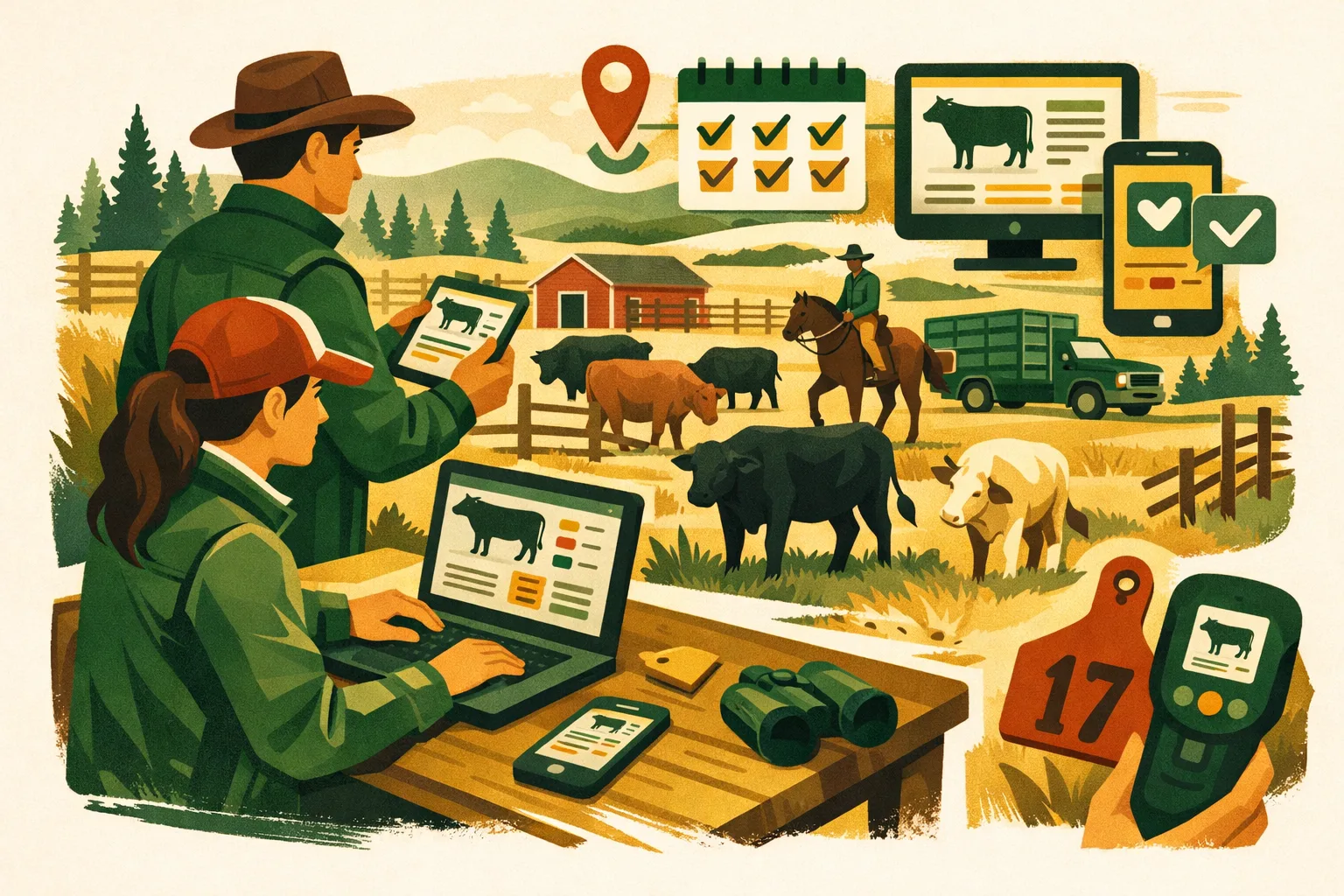
Keeping accurate cattle breeding records is crucial for successful herd management. However, many farm operators still rely on traditional pen-and-paper methods, which can lead to disorganization and inefficiency. Imagine trying to locate a critical breeding date or lineage information from a stack of papers when you need it most. Fortunately, there are more efficient and reliable ways to manage these records. This guide explores a streamlined workflow for tracking cattle breeding records and demonstrates how digital solutions like HerdFlo can enhance your record-keeping process.
The Importance of Accurate Cattle Breeding Records
Accurate cattle breeding records are the backbone of a successful cattle operation. They provide essential insights into reproductive performance, genetic lineage, and herd health. Here’s why maintaining precise records is non-negotiable:
- Improved Breeding Outcomes: By tracking heat dates and breeding attempts, you can make informed decisions to improve conception rates.
- Efficient Herd Management: Detailed records help in scheduling AI (Artificial Insemination) or bull turnout, minimizing the chances of missed cycles.
- Enhanced Genetic Selection: Knowing the lineage of your cattle allows you to select for desirable traits and avoid inbreeding.
- Regulatory Compliance: Accurate records are often required to meet industry standards and regulations.
Workflow for Tracking Cattle Breeding Records
1. Tracking Heat Dates
Identifying and recording heat dates is the first step in managing your breeding program. Missing a heat cycle can delay breeding and reduce overall productivity.
Action Steps:
- Observe: Monitor your cattle for signs of heat at least twice daily. Look for behaviors like mounting, restlessness, and increased vocalization.
- Record: Log the date and time of observed heat. Note any relevant behaviors.
- Predict: Use previous records to predict when the cow will next come into heat, typically every 21 days.
2. Scheduling AI or Bull Turnout
Once heat is detected, timely breeding is critical. Whether using AI or natural service, planning is key.
Action Steps:
- AI Scheduling: Arrange for AI approximately 12 hours after the first sign of standing heat.
- Bull Turnout: Introduce the bull to the herd during the peak of the heat cycle for optimal results.
3. Conducting Pregnancy Checks
Pregnancy checks are essential to confirm conception and plan for calving.
Action Steps:
- Timing: Conduct a pregnancy check 30-45 days after breeding.
- Method: Choose between rectal palpation, ultrasound, or blood tests based on resources and expertise.
4. Recording Expected Calving Dates
Accurate prediction of calving dates allows for better preparation and resource management.
Action Steps:
- Calculate: Use the breeding date and the gestation period (approximately 283 days) to determine the expected calving date.
- Prepare: Ensure that facilities and personnel are ready for calving.
Why Paper Records Fail
Relying on paper records for breeding information is fraught with challenges:
- Disorganization: Papers can easily become misplaced, leading to lost or incomplete records.
- Inaccessibility: Retrieving information from a physical stack of papers is time-consuming and inefficient.
- Error-Prone: Manual entry increases the risk of mistakes, which can have significant impacts on breeding success.
Comparison Table: Paper Records vs. Digital Solutions
| Feature | Paper Records | Digital Solutions (e.g., HerdFlo) |
|---|---|---|
| Accessibility | Limited | Anywhere, Anytime Access |
| Searchability | Difficult | Instantly Searchable |
| Error Rate | High | Reduced Through Automation |
| Data Security | Vulnerable | Secure and Backed Up |
| Scalability | Challenging | Easily Scalable |
Practical Checklist for Cattle Breeding Record-Keeping
Here’s a concise checklist to help you streamline your breeding record-keeping process:
-
Monitor Heat Cycles:
- Observe behavioral signs daily.
- Record observations promptly.
-
Plan Breeding:
- Schedule AI or bull turnout according to heat observations.
- Ensure all necessary supplies and personnel are ready.
-
Conduct Pregnancy Checks:
- Schedule checks 30-45 days post-breeding.
- Choose a suitable method based on expertise and resources.
-
Record and Predict Calving:
- Calculate expected calving dates based on breeding records.
- Prepare facilities and staff for calving.
-
Review and Update Records:
- Regularly review records to ensure accuracy.
- Update records promptly with any changes or new information.
How HerdFlo Helps
Managing cattle breeding records can be significantly simplified with the use of digital solutions like HerdFlo. Here’s how HerdFlo enhances your record-keeping process:
- Centralized Data Management: HerdFlo allows you to store all breeding records in one place, eliminating the need for paper-based systems.
- Automated Tracking: The app helps automate tracking of heat cycles, breeding dates, and expected calving, reducing manual errors.
- Accessible Anytime, Anywhere: With HerdFlo, you can access your records from any device, ensuring you have the information you need right at your fingertips.
- Enhanced Decision Making: With comprehensive data analytics and reporting features, HerdFlo provides insights that help improve breeding outcomes and overall herd management.
For full-operation records, including herd health and breeding, combine the power of HerdFlo with FarmsFlo (farmsflo.com). Download the free HerdFlo app today at herd.farmsflo.com and streamline your cattle breeding records with ease.