What Cattle Records You Actually Need to Keep (and 6 Fields Most Ranchers Forget)
The cattle records that actually matter at calving, sale, and audit time — and the six fields most ranchers forget to log.
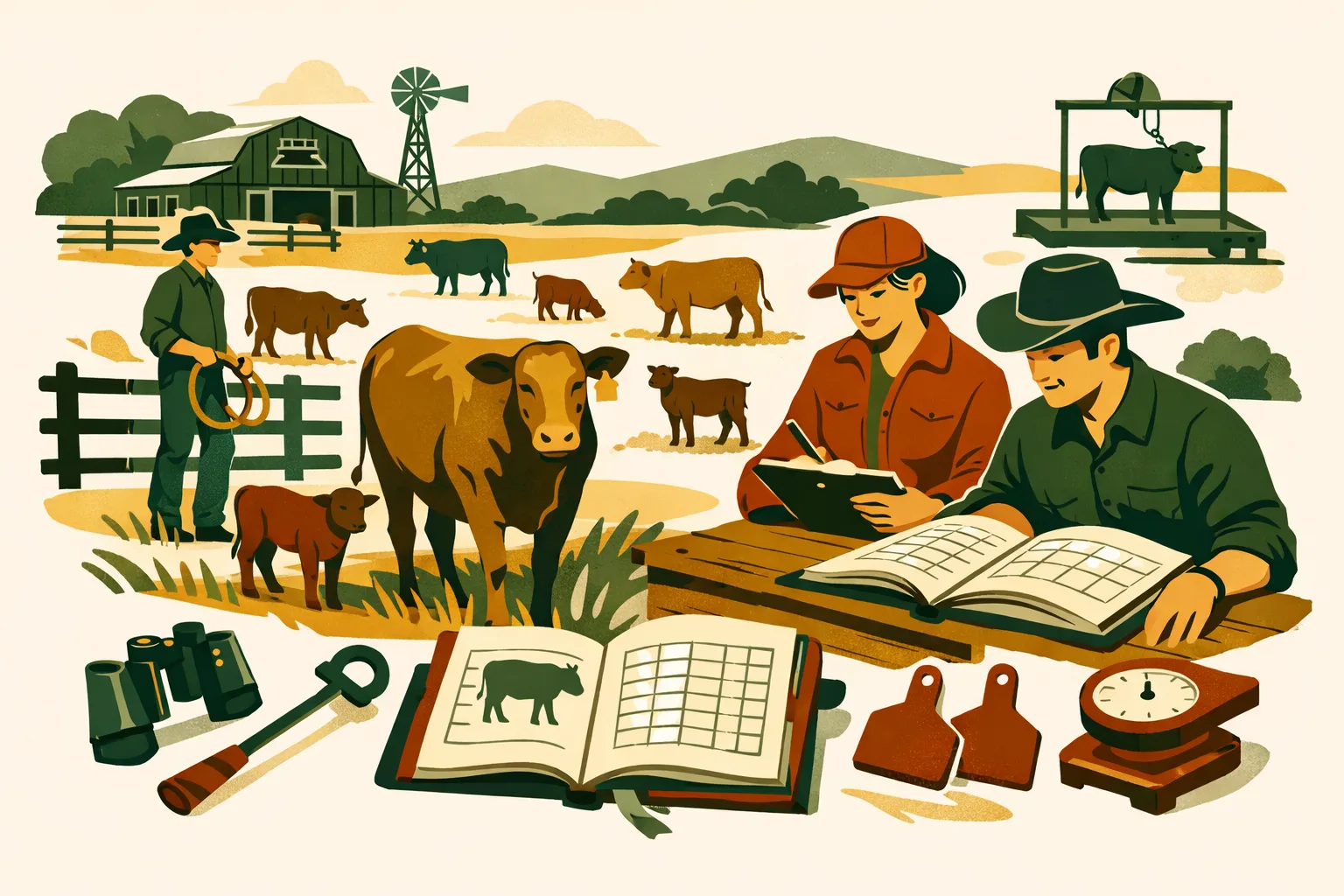
Why Cattle Record Keeping is Non-Negotiable for Ranchers
Effective cattle record keeping is the backbone of a successful ranching operation. It’s more than a bureaucratic necessity; it’s a strategic tool that can enhance productivity, optimize herd health, and boost profitability. Despite its importance, many ranchers overlook essential fields that could transform their operations. This guide will explore the minimum viable cattle record set and highlight six high-value fields often forgotten.
The Minimum Viable Cattle Record Set
For ranchers, keeping records isn’t just about ticking boxes. It’s about maintaining a system that supports decision-making and ensures compliance with industry standards. Below is a breakdown of the essential records you must maintain.
Identification and Basic Information
- Animal ID: Each animal should have a unique identifier, such as an ear tag number. This is the cornerstone of any cattle record-keeping system.
- Date of Birth: Knowing the age of your cattle helps in planning breeding cycles and assessing productivity.
- Breed: Documenting the breed is crucial for genetic tracking and marketing purposes.
Health and Medical Records
- Vaccination Records: Keep an accurate log of all vaccinations to prevent diseases and ensure compliance with health regulations.
- Treatment Records: Document every medical treatment, including medication used, dosage, and administered by whom.
Reproductive Records
- Breeding Dates: Record the first and subsequent breeding dates to project calving schedules and assess reproductive performance.
- Calving Records: Note the date, sex, and status of each calf born. This information is valuable for future breeding decisions.
Financial Records
- Purchase and Sales Records: Track all transactions, including purchase costs, sales prices, and dates, to evaluate financial performance.
The 6 High-Value Fields Most Ranchers Forget
While many ranchers maintain the basic records, several high-value fields often go overlooked. These fields provide insights that can dramatically improve herd management.
1. Sire/Dam Identification
Knowing the parentage of your cattle can significantly impact breeding decisions. Recording the sire and dam helps in genetic tracking and improving herd genetics over time.
2. Body Condition Score (BCS)
BCS is a visual assessment of an animal’s fat reserves and is crucial for determining nutritional needs. Regularly recording BCS allows for timely nutritional adjustments and can prevent issues related to both underfeeding and overfeeding.
3. Treatment Withdrawal Dates
Documenting treatment withdrawal dates ensures that no animal is sold or slaughtered with drug residues in its system, which could lead to compliance issues and potential financial penalties.
4. Weight Records
Regularly recording weights helps track growth rates, assess feeding programs, and make informed marketing decisions.
5. Pasture/Location
Keeping track of where each animal is pastured can help in managing grazing rotations, preventing overgrazing, and maximizing pasture productivity.
6. Health Events
Detailed records of health events, such as illness outbreaks or injuries, can assist in identifying patterns and implementing preventative measures.
Comparison Table: Basic vs. High-Value Fields
| Field | Basic Records | High-Value Records |
|---|---|---|
| Animal ID | Required | Required |
| Date of Birth | Required | Required |
| Breed | Required | Required |
| Vaccination Records | Required | Required |
| Treatment Records | Required | Required |
| Sire/Dam Identification | Not Required | Recommended |
| Body Condition Score (BCS) | Not Required | Recommended |
| Treatment Withdrawal Dates | Not Required | Recommended |
| Weight Records | Not Required | Recommended |
| Pasture/Location | Not Required | Recommended |
| Health Events | Not Required | Recommended |
Practical Checklist for Cattle Record Keeping
To streamline cattle record keeping, follow this comprehensive checklist:
- Assign a unique ID to each animal.
- Record the date of birth and breed.
- Document all vaccinations and treatments, including withdrawal dates.
- Record breeding and calving events.
- Track financial transactions related to cattle purchases and sales.
- Regularly assess and record Body Condition Scores.
- Document sire and dam for genetic tracking.
- Record weights at regular intervals.
- Keep a log of pasture locations and grazing rotations.
- Monitor and record any health events.
Time and Cost Estimates
Implementing a comprehensive cattle record-keeping system involves both time and financial investments. Here’s a rough estimate:
- Time: Expect to spend around 2-3 hours per week updating records for a herd of 100 cattle.
- Cost: Initial setup costs can range from $500 to $2,000, depending on the technology used (e.g., software, electronic ID tags). Ongoing costs, including software subscriptions or data entry, might be around $50 to $200 monthly.
How HerdFlo Helps
Managing cattle records manually can be cumbersome and prone to errors. HerdFlo offers a robust solution by automating record-keeping through an easy-to-use app. With HerdFlo, you can:
- Automatically track essential data fields, including the high-value fields often forgotten.
- Integrate with FarmsFlo for a comprehensive view of your entire operation.
- Access data anywhere, anytime, ensuring real-time decision-making.
Don’t let essential data slip through the cracks. Streamline your cattle record keeping with the free HerdFlo app at herd.farmsflo.com, and for full-operation records, explore FarmsFlo at farmsflo.com.