Goat Herd Records: Kidding Dates, Lineage, and Health in One Place
Keep goat herd records that actually help — kidding dates, lineage, FAMACHA scores, and health history in one place.
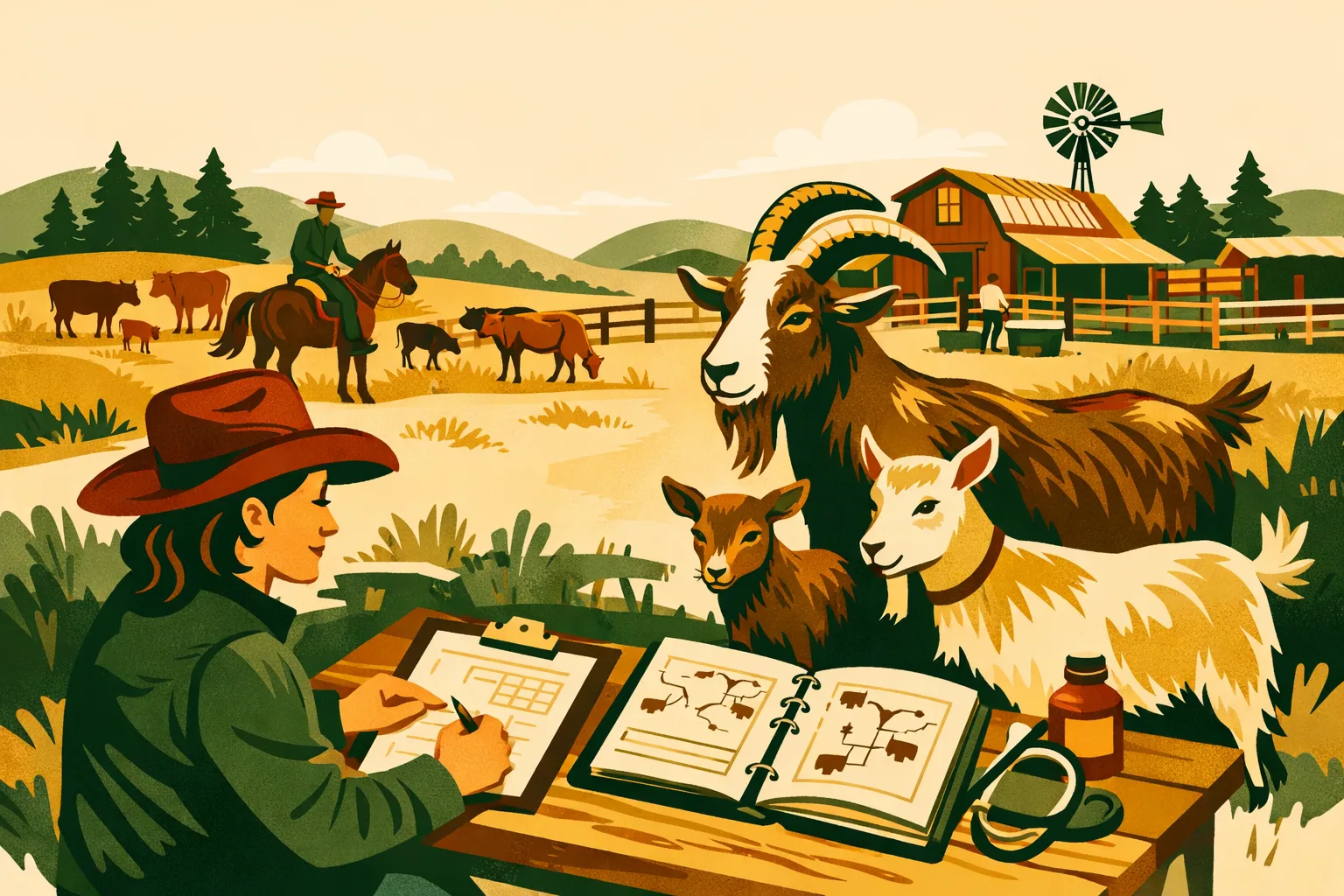
Managing a goat herd efficiently requires meticulous record-keeping. While goats are known for their resilience and adaptability, they still require attentive care and precise management to ensure their health and productivity. Comprehensive records not only safeguard the well-being of your herd but also enhance breeding success, milk production, and parasite control. Let’s dive into the essential aspects of goat herd records, ranging from kidding dates and lineage to health records, and discover how HerdFlo can streamline the process for you.
Why Record-Keeping is Crucial in Goat Herd Management
Record-keeping acts as the backbone of effective herd management. By maintaining accurate records, you can:
- Track Reproductive Success: Know when each doe is due, assess kidding intervals, and plan future breeding.
- Monitor Health and Parasites: Keep an eye on FAMACHA scores to manage internal parasites effectively.
- Preserve Lineage: Maintain detailed lineage records for breeding decisions and pedigree verification.
- Optimize Milk Production: Monitor milk yields to manage feeding and milking schedules efficiently.
Understanding Kidding Records
Kidding records are vital for tracking the reproductive cycle of your does. Here’s what to include in your kidding records:
- Doe Identification: Record the tag number or name of the doe.
- Breeding Date: Note the date each doe was bred. This helps predict the kidding date.
- Kidding Date: Record the actual date of kidding to calculate the gestation period.
- Number of Kids Born: Document the number and sex of the kids born to track fertility rates.
- Kidding Complications: Note any difficulties experienced during birth.
Checklist for Kidding Records
- Doe ID and breeding date
- Expected and actual kidding dates
- Number, sex, and condition of kids
- Complications during kidding
Managing Lineage Records
Lineage records are essential for making informed breeding decisions. They help maintain genetic diversity and avoid inbreeding. Here’s what to track:
- Pedigree Details: Record the sire and dam of each goat.
- Generational Information: Document grandparents and great-grandparents if possible.
- Breed Characteristics: Note unique breed traits for selection purposes.
Lineage Record Example
| Goat ID | Sire | Dam | Grandparents | Breed Traits |
|---|---|---|---|---|
| 001 | S001 | D001 | SG001, DG001 | High Milk Yield |
Action Steps for Lineage Records
- Create a systematic approach for recording lineage data.
- Use identification tags to correlate with paper or digital records.
- Regularly update lineage records following each breeding season.
Health Records: FAMACHA and Parasite Control
Parasite management is critical in goat health, and FAMACHA scoring is a proven method for assessing anemia caused by internal parasites like barber pole worms. Here’s how to integrate FAMACHA into your records:
- FAMACHA Score: Regularly assess and record the FAMACHA score for each goat.
- Deworming Schedule: Document dates and types of dewormers used.
- Health Observations: Note any symptoms or health issues.
Comparison Table: FAMACHA Scoring System
| FAMACHA Score | Eye Membrane Color | Parasite Load | Action Required |
|---|---|---|---|
| 1 | Red | None | No action needed |
| 2 | Red-Pink | Low | Monitor |
| 3 | Pink | Moderate | Consider deworming |
| 4 | Light Pink | High | Deworm urgently |
| 5 | White | Severe | Immediate action |
Health Record Checklist
- Regular FAMACHA assessments
- Deworming dates and medications
- Health observations and treatments
Milk Production Records
Tracking milk production is crucial for dairy goat herds. Accurate records help in managing feeding, milking schedules, and improving milk yield. Here’s what to include:
- Daily Milk Yield: Measure and record the amount of milk from each doe.
- Feeding Regimen: Note the feed type and quantities given.
- Health and Stress Factors: Observe any factors that might affect milk production.
Steps for Managing Milk Production Records
- Establish a daily routine for measuring milk yield.
- Record data in a centralized system accessible to all farm staff.
- Analyze trends to make informed decisions on feeding and management.
How HerdFlo Helps
Effective record-keeping can be overwhelming, especially when dealing with multiple aspects of herd management. This is where the HerdFlo app (herd.farmsflo.com) comes into play. Designed to handle multi-species herds, HerdFlo allows you to:
- Automate Record-Keeping: Easily input and track kidding dates, lineage, health records, and milk production.
- Access Data Anywhere: Use the app on any device to manage your records in real-time.
- Integrate with FarmsFlo: Sync with FarmsFlo (farmsflo.com) for comprehensive farm management, covering everything from livestock to equipment and financials.
Start simplifying your herd management today by tracking it automatically with the free HerdFlo app. Visit herd.farmsflo.com to learn more and get started.