7 Ways Cattle Software Transforms Your Herd
Learn 7 ways cattle record keeping software improves herd decisions and protects breeding records for commercial livestock operations in 2026.
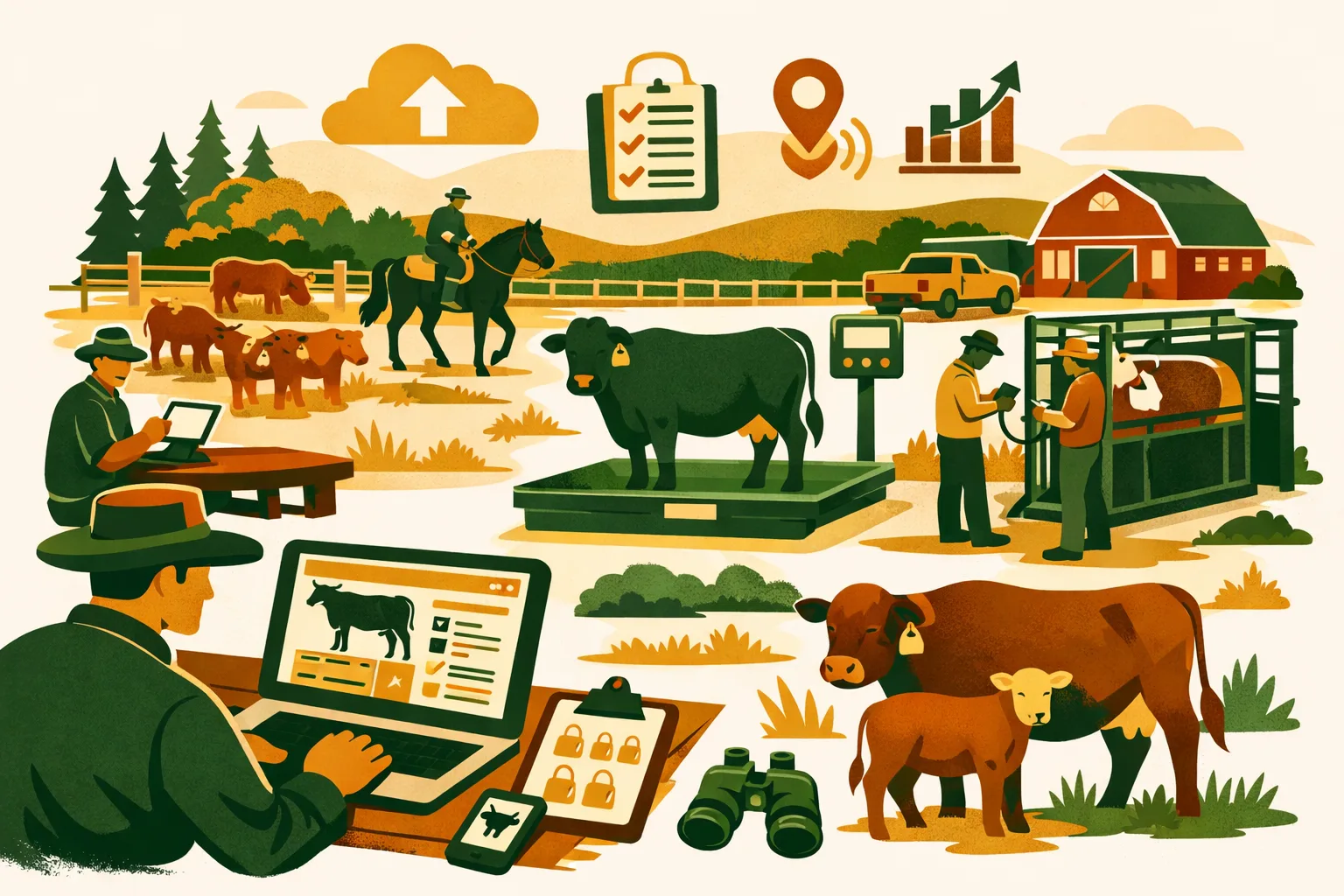
A good cattle operation can survive on memory, notebooks, spreadsheets, and barn-wall notes for a while. But as herd size grows, breeding windows tighten, margins get thinner, and compliance expectations increase, the cost of missing one heat, one treatment withdrawal date, one open cow, or one underperforming calf adds up fast. The producers who gain an edge in 2026 will not just collect more data — they will use the right records at the right time to make faster, cleaner, more profitable herd decisions.
Why Cattle Records Are Becoming a Profit Tool, Not Just Paperwork
Cattle record keeping used to be treated as something you did after the real work was finished. You wrote down calving dates, tagged calves, logged treatments, and filed sale weights because you might need them later.
That approach is changing.
Modern cattle record keeping software helps turn daily herd activity into decision-ready information. Instead of digging through calving books, loose papers, text messages, or spreadsheets, producers can pull up a cow’s breeding history, calving interval, treatment records, calf performance, and sale outcomes in seconds.
For commercial cow-calf operators, seedstock producers, backgrounders, stockers, and diversified livestock farms, better records can affect:
- Pregnancy rates
- Calving distribution
- Weaning weights
- Replacement heifer selection
- Cull decisions
- Health treatment accuracy
- Labor efficiency
- Regulatory readiness
- Buyer confidence
- Long-term herd profitability
The goal is not to make ranchers stare at screens all day. The goal is to make sure the work already happening in the chute, pasture, barn, or calving lot creates records that can actually improve management.
1. Faster Breeding Decisions Without Guesswork
Breeding management is one of the clearest places where cattle record keeping software can pay for itself in time and better decisions.
When breeding records are scattered across notebooks, calendar reminders, and memory, it becomes easy to miss key details:
- Which cows were exposed to which bull
- When AI was performed
- Which cows returned to heat
- Which females have short or long calving intervals
- Which cows consistently breed back early
- Which cows are repeatedly late, open, or difficult to settle
Software gives you a central breeding record for every animal.
What Better Breeding Records Should Include
At minimum, every breeding record should capture:
- Cow or heifer ID
- Breeding date
- Breeding method: natural service, AI, embryo transfer
- Sire or bull ID
- Pasture or breeding group
- Expected calving date
- Pregnancy check result
- Technician or staff member
- Notes on heat signs, synchronization protocol, or breeding issues
For operations using multiple bulls or AI sires, sire assignment records are especially valuable. They help connect calf performance back to sire groups and make bull selection more data-driven.
How Software Improves Breeding Management
Cattle record keeping software can help you:
- Create expected calving dates automatically
- Flag females due for pregnancy checks
- Compare bred, open, and exposed females
- Sort cows by calving interval
- Identify late-breeding females
- Track AI versus natural service outcomes
- Monitor bull exposure groups
- Build future breeding schedules
Instead of asking, “Which cows should we watch next month?” you can generate a list of females expected to calve within a date range. Instead of debating whether a cow is really a problem, you can review three or four years of calving and pregnancy history.
Practical Example: Tightening the Calving Window
A commercial cow-calf operator wants more calves born in the first 45 days of calving season. With paper records, the producer may know generally which cows calve late, but not have clean year-to-year data.
With software, the operator can sort cows by:
- Calving date
- Days postpartum at rebreeding
- Pregnancy status
- Number of consecutive late calves
- Age of cow
- Calf weaning weight
That makes it easier to identify cows that consistently fall outside the desired calving window. Some may still earn a place in the herd because they raise heavy calves. Others may be clear cull candidates.
The outcome is not automatic, but the decision becomes clearer.
2. Cleaner Calving Records That Save Time During the Busiest Season
Calving season is when poor records become most painful. Long nights, bad weather, multiple pastures, assisted births, weak calves, grafting, bottle feeding, and colostrum management all create details that matter later.
If those details are not recorded quickly, they are often lost.
Cattle record keeping software helps capture calving information while it is fresh, then connects each calf to its dam, sire, birth date, birth weight, and early health notes.
Calving Records Worth Tracking
A useful calving record should include:
- Dam ID
- Calf ID
- Birth date
- Birth location or pasture
- Sex
- Birth weight, if measured
- Sire ID, if known
- Calving ease score
- Presentation problems
- Assistance required
- Twin status
- Stillbirth or death loss
- Colostrum status
- Mothering ability notes
- Calf vigor
- Treatments given at birth
- Tag number and visual identification
Even if you do not weigh every calf at birth, consistent calving dates, dam IDs, calf IDs, and calving ease notes are extremely useful.
Why Calving Ease Records Matter
Calving difficulty is not just a one-day problem. It affects:
- Calf survival
- Cow recovery
- Breed-back timing
- Labor requirements
- Future sire selection
- Replacement heifer decisions
A cow that needs help every year may be costing more than she appears to. A bull whose calves repeatedly cause hard pulls may not fit your cow herd, even if the calves grow well later.
Software makes it easier to spot these patterns.
Reducing Tagging and Pairing Mistakes
In a busy calving lot, mismatched dam-calf pairs can create serious problems. If a calf is recorded under the wrong dam, future weaning weights, milk ability comparisons, and replacement decisions become unreliable.
Digital records reduce mistakes by letting you enter pair data immediately. Some systems allow mobile entry from the pasture, so you do not have to carry a notebook, rewrite notes later, or rely on memory at the end of the day.
Time Estimate: Digital Calving Entry
For most commercial operations, entering a basic calving record takes about 30 to 90 seconds per calf once animal IDs are already in the system.
A more detailed calving record with birth weight, calving ease, treatments, and notes may take 2 to 3 minutes.
That time is usually less than the time spent rewriting paper notes into a spreadsheet later — and the digital record is immediately searchable.
3. More Accurate Health Records and Withdrawal Management
Health records are one of the highest-risk areas of cattle management. Missed treatment dates, unclear dosages, lost withdrawal information, or undocumented follow-up can create financial and compliance problems.
Cattle record keeping software helps keep treatment records tied directly to the animal or group treated.
What to Record for Every Treatment
Every treatment record should include:
- Animal ID or group ID
- Date treated
- Diagnosis or reason for treatment
- Product used
- Dosage
- Route of administration
- Lot number, when available
- Treatment location
- Person administering treatment
- Withdrawal period for meat and milk, where applicable
- Follow-up date
- Response to treatment
- Veterinary instructions, if applicable
This is especially useful for stocker, backgrounding, feedlot, dairy-beef, and cow-calf operations that treat multiple animals across different groups.
Withdrawal Date Tracking
One of the most practical advantages of software is withdrawal date visibility.
If an animal is treated with a product that has a meat withdrawal period, the software record can help the operator know when that animal is eligible for sale or slaughter. This reduces the risk of accidentally marketing an animal too soon after treatment.
For dairy or nurse-cow operations, milk withdrawal records are also essential.
Health Trends You Can Actually Use
Individual treatment records are useful, but herd-level health trends are where management value grows.
With clean records, producers can identify:
- Which age groups have the most sickness
- Which pastures or pens are tied to more health events
- Whether purchased cattle have higher treatment rates
- Which vaccines or protocols are associated with better outcomes
- Which calves are treated repeatedly
- Which cows have chronic foot, eye, udder, or reproductive issues
Over time, these records can guide vaccination schedules, mineral programs, biosecurity practices, purchasing decisions, and culling.
Cost Estimate: The Cost of Missing a Treatment Detail
The cost of poor health records can include:
- Retreatment because the first treatment was forgotten or unclear
- Extra labor sorting treated cattle
- Lost sale opportunities due to uncertain withdrawal status
- Lower buyer trust
- Veterinary time spent reconstructing incomplete histories
- Keeping chronic animals too long because the pattern was not visible
Software does not replace good stockmanship or veterinary guidance. It helps preserve the information needed to make those skills more effective.
4. Better Cull and Replacement Decisions Based on Real Performance
Culling should not be based only on age, attitude, or what you remember from last spring. Those factors matter, but the best cull decisions combine observation with performance history.
Cattle record keeping software helps identify which cows are profitable, which are borderline, and which are quietly costing the operation money.
Records That Improve Cull Decisions
Useful cull decision data includes:
- Pregnancy status
- Calving date
- Calving interval
- Calving ease
- Weaning weight of calves
- Calf health issues
- Cow health history
- Udder quality
- Feet and leg notes
- Disposition
- Body condition score
- Age
- Number of calves weaned
- Replacement daughters retained
- Sale value of progeny
A cow that calves early every year, breeds back, raises a strong calf, and avoids treatment is likely valuable even if she is not the biggest cow in the pasture.
A cow that is always late, has a poor udder, needs extra feed, or raises below-average calves may be less profitable than she looks.
Replacement Heifer Selection
Replacement heifers shape the future herd. Software can help select heifers based on more than visual appraisal.
Consider tracking:
- Dam productivity
- Dam calving interval
- Dam calving ease
- Birth date within calving season
- Weaning weight
- Adjusted weaning weight, if used
- Health history
- Structural notes
- Temperament
- Sire group
- Breed composition
- Pelvic measurements, if collected
- Breeding date
- Pregnancy status
A heifer from an early-calving, easy-fleshing, low-maintenance cow may be more valuable long term than a heavier heifer from a problem cow.
Avoiding Emotional Culling Decisions
Every producer has favorite cows. Some earn it. Others are kept because they are familiar.
Digital records make culling more objective. You can still use judgment, but you are not relying only on memory. If a cow has been treated for foot problems three times, calved late twice, and weaned a light calf, the record tells a story.
Practical Cull Sort Categories
When reviewing records, consider sorting cows into four groups:
-
Keep without question
Bred early, productive, healthy, good calf record. -
Watch list
Minor issue, late calf, lower weaning weight, or one health concern. -
Cull candidate
Open, chronic health issue, poor udder, poor disposition, repeated calving problems. -
Data missing
Not enough history to judge confidently.
That fourth category matters. Missing records create uncertainty, and uncertainty often keeps marginal animals in the herd longer than they should be.
5. Improved Weight Tracking, Weaning Analysis, and Sale Planning
Weight records are one of the most direct links between herd management and revenue. Whether you sell calves at weaning, background them, retain ownership, or market breeding stock, weight data matters.
Cattle record keeping software allows producers to connect weights to individual animals, groups, dams, sires, dates, and management events.
Weight Records to Capture
Key weight records may include:
- Birth weight
- Weaning weight
- Yearling weight
- Preconditioning start weight
- Preconditioning end weight
- Sale weight
- Mature cow weight
- Replacement heifer development weights
- Bull breeding soundness or conditioning weights
Not every operation needs every weight. The right records depend on your business model.
A commercial cow-calf operation may focus on birth date, weaning weight, and sale weight. A seedstock operation may track more detailed performance metrics. A backgrounder may focus on purchase weight, treatment history, average daily gain, and sale weight.
Understanding Weaning Performance
Weaning weights are more useful when connected to:
- Dam ID
- Calf age
- Sex
- Sire group
- Pasture
- Creep feed status
- Health treatments
- Calving date
- Cow age
- Weaning date
A heavy calf may be heavy because it is older. A younger calf with a slightly lower actual weaning weight may be performing better than it first appears. Software makes it easier to view records in context.
Sale Group Planning
When records are clean, sale planning becomes more strategic.
You can sort calves by:
- Weight range
- Sex
- Age
- Health protocol
- Treatment status
- Withdrawal clearance
- Sire group
- Ownership group
- Weaning date
- Preconditioning days
This helps build more uniform groups, answer buyer questions, and avoid last-minute sorting problems.
Comparison Table: Paper, Spreadsheet, and Cattle Record Keeping Software
| Record System | Best Fit | Strengths | Weaknesses | Time Impact |
|---|---|---|---|---|
| Paper notebook or calving book | Very small herds, backup notes | Simple, low cost, works without internet or devices | Hard to search, easy to lose, difficult to analyze, often rewritten later | Fast in the moment, slower later |
| Spreadsheet | Small to mid-size herds with one main recordkeeper | Flexible, familiar, inexpensive | Errors from manual entry, limited mobile use, hard to manage relationships between cows, calves, sires, and treatments | Moderate setup time, ongoing cleanup needed |
| Cattle record keeping software | Commercial herds, multi-person teams, breeding and health tracking | Animal history, mobile access, reminders, reports, searchable records, better decision support | Requires setup, consistent data entry, staff training | Slight setup time, faster retrieval and reporting |
The right answer may be a staged transition. Many producers start by moving core records first: animal inventory, breeding, calving, health, and sales. More advanced records can be added later.
6. Less Labor Wasted Searching, Rewriting, and Rechecking Records
Labor is one of the tightest resources on many cattle operations. Even when family labor is involved, time still has value.
Poor record systems create hidden labor costs:
- Rewriting field notes into spreadsheets
- Searching for old treatment records
- Calling someone to ask which bull was in which pasture
- Rechecking tags because a list is outdated
- Sorting cattle twice because withdrawal status is unclear
- Looking through multiple notebooks for calving history
- Building sale lists manually
- Preparing vet or buyer records from scratch
Cattle record keeping software reduces these repeated tasks by keeping information in one searchable place.
Where the Time Savings Usually Show Up
Time savings often appear during:
- Calving season
- Pregnancy checking
- Weaning
- Vaccination days
- Preconditioning
- Sale preparation
- Cull cow selection
- Annual herd inventory
- Veterinary visits
- Replacement selection
- Bull turnout planning
For example, before preg-check day, a producer can create a list of exposed females, breeding groups, and expected calving ranges. During the workday, results can be entered directly. Afterward, open cows can be sorted into a cull or recheck list.
That is much cleaner than updating three paper lists after dark.
Multi-Person Record Access
Many commercial farms have more than one person handling cattle. One person may check calving cows, another may treat sick calves, another may haul cattle, and another may handle office records.
If all records live in one notebook or one person’s memory, mistakes happen.
Software allows the operation to create a shared source of truth. The crew can see current animal information, and the manager can review records without chasing down every detail verbally.
Time Estimate: Record Retrieval
With paper records, finding a specific cow’s past calving dates, treatment history, and last calf record might take 5 to 20 minutes depending on organization.
With searchable software, the same information can often be found in under a minute.
That matters when you are standing at the chute, loading a trailer, talking to a vet, or making a sale decision.
7. Stronger Management Reports for Planning, Lenders, Buyers, and Vets
Good records are useful inside the operation, but they also improve communication outside the farm.
Cattle record keeping software can help produce cleaner reports for:
- Veterinarians
- Lenders
- Insurance providers
- Breed associations
- Buyers
- Business partners
- Employees
- Family members involved in succession planning
- Regulatory or audit needs, depending on operation type and location
Reports That Help Commercial Producers
Useful reports may include:
- Current herd inventory
- Cow-calf pairs
- Pregnant, open, and exposed females
- Calving distribution
- Expected calving list
- Treatment history
- Withdrawal status
- Vaccination records
- Weaning weights
- Sale groups
- Cull candidates
- Replacement heifer candidates
- Bull exposure groups
- Death loss and reasons
- Purchase and sale records
The goal is not to produce reports for the sake of paperwork. The goal is to answer management questions quickly.
Better Vet Conversations
Veterinarians can give better advice when they have better herd history. If you can show treatment rates, calf losses, vaccine timing, reproductive performance, or recurring disease issues, the conversation becomes more targeted.
For example:
- Are scours cases clustered in certain pastures?
- Are respiratory cases higher in purchased calves?
- Are foot issues repeating in the same bloodline or environment?
- Are open cows concentrated in one breeding group?
- Are calf losses tied to dystocia, weather, or weak calf syndrome?
The more complete the records, the easier it is to separate one-time events from patterns.
Better Buyer Confidence
Buyers increasingly value cattle with documented health and management history. While not every market pays a premium for records, clean documentation can help support credibility.
Useful buyer-facing records may include:
- Vaccination dates
- Products used
- Weaning date
- Preconditioning period
- Treatment history
- Withdrawal status
- Source and age details, where applicable
- Breed or sire information
- Weight history
If two groups of calves look similar, the group with clearer records may be easier for a buyer to evaluate.
What Cattle Record Keeping Software Should Track
Not all software is built the same way. Before choosing a system, make sure it fits cattle workflows rather than forcing you into generic farm notes.
Core Animal Inventory
Your system should track:
- Animal ID
- Visual tag
- EID or RFID, if used
- Name, if applicable
- Sex
- Breed or breed composition
- Birth date or estimated age
- Dam ID
- Sire ID
- Ownership
- Status: active, sold, dead, culled
- Location or pasture
- Purchase source
- Purchase date
- Sale date
- Sale price, if tracked
Inventory is the foundation. If animal lists are outdated, every other record becomes less reliable.
Reproduction Records
For cow-calf operations, reproduction records are essential:
- Heat dates
- AI dates
- Natural service exposure
- Bull assignment
- Pregnancy check results
- Expected calving dates
- Calving outcomes
- Open cow history
- Embryo transfer records, if used
Health and Treatment Records
Health records should be tied to animals or groups:
- Vaccinations
- Treatments
- Diagnostics
- Veterinary visits
- Treatment response
- Withdrawal dates
- Death loss
- Necropsy results, if available
- Chronic condition notes
Performance and Production Records
Performance records help identify profitable genetics and management practices:
- Birth weights
- Weaning weights
- Yearling weights
- Average daily gain
- Sale weights
- Mature cow weights
- Body condition scores
- Calving ease
- Milk or udder notes
- Disposition
Financial and Sale Records
Even if the software is focused on herd records, basic financial connections are useful:
- Purchase price
- Sale price
- Buyer
- Market date
- Hauling notes
- Commission or fees
- Medical cost per animal, if tracked
- Feed or yardage costs, if tracked by group
For full-operation records beyond herd activity, including broader farm expenses, assets, and enterprise management, producers may also use FarmsFlo at farmsflo.com.
How to Move From Paper or Spreadsheets to Software
Switching systems does not have to be complicated. The most successful transitions start with high-value records and build from there.
Step 1: Clean Up Your Current Animal List
Before importing or entering records, create a current active inventory.
Include:
- Cow IDs
- Bull IDs
- Replacement heifers
- Calves on hand
- Purchased animals
- Sold or culled animals marked inactive
- Dead animals removed from the active list
Do not start by entering every historical note from the past 15 years. Start with an accurate current herd.
Step 2: Decide Which Records Matter Most
For most cattle operations, begin with:
- Animal inventory
- Breeding records
- Calving records
- Health treatments
- Pregnancy check results
- Weaning weights
- Sale and cull records
You can add body condition scores, pasture moves, genetic details, and financial records once the core system is working.
Step 3: Standardize Animal Identification
Software is only as good as the IDs entered.
Make sure your operation has a clear system for:
- Cow tags
- Calf tags
- Bull IDs
- Replacement heifer IDs
- EID/RFID tags, if used
- Retagging lost tags
- Cross-referencing old tag numbers
If multiple people enter records, agree on exactly how IDs should be typed.
For example, avoid one person entering “45,” another entering “Cow 45,” and another entering “045” unless the system can reconcile those formats.
Step 4: Train the Crew on Simple Workflows
Do not overwhelm staff with every feature at once.
Start with common tasks:
- Add a calf
- Record a treatment
- Enter a breeding event
- Update pregnancy status
- Move an animal to sold or culled
- Add a note
- Find an animal history
A 30- to 60-minute training session is often enough to start if the software is practical and the workflows match the operation.
Step 5: Use Software During Real Cattle Work
Records are most accurate when entered close to the work.
Use the software during:
- Calving checks
- Chute work
- Vaccination
- Preg checking
- Weaning
- Sorting
- Sale loading
- Bull turnout
If mobile entry is not practical in a certain environment, use paper as a temporary capture tool and enter records the same day.
Practical Checklist: Setting Up Cattle Record Keeping Software
Use this checklist to get your system running without creating unnecessary office work.
Before Setup
- Confirm current herd inventory
- Decide who will manage the software
- Choose standard ID formats
- Gather current cow, bull, calf, and heifer lists
- Collect recent breeding and calving records
- Collect current treatment and withdrawal records
- Decide which historical records are worth entering
- Identify staff who need access
During Setup
- Add active animals first
- Mark sold, dead, or culled animals as inactive
- Enter known dam and sire relationships
- Add current breeding groups
- Enter expected calving dates, if known
- Add active withdrawal dates
- Set up locations, pastures, or groups
- Test adding a calf record
- Test adding a treatment record
- Test finding an animal history
First 30 Days
- Enter every new calving event
- Enter every treatment the same day
- Record all animal movements between groups
- Update sold, dead, or culled animals immediately
- Review active inventory weekly
- Fix duplicate IDs or missing IDs
- Ask staff what part of entry is slowing them down
- Create one useful report, such as expected calving list or treated animals
First 90 Days
- Review pregnancy, calving, and health reports
- Identify cows with missing records
- Build a cull candidate list
- Build a replacement heifer watch list
- Compare calf performance by dam, sire, or group
- Review health treatment patterns with your veterinarian
- Decide which additional records to track next
Cost and Time Expectations for 2026
The cost of cattle record keeping software varies depending on features, herd size, mobile access, reporting, integrations, and whether the product is part of a broader farm management platform.
Common Cost Categories
When evaluating software, consider:
- Subscription cost
- Setup time
- Data migration time
- Staff training time
- Mobile device needs
- EID/RFID equipment, if used
- Support availability
- Reporting features
- Export options
- Multi-user access
Some apps offer free starting options. Others charge monthly or annually. RFID readers, scales, and chute-side hardware can add cost, but they are not required for every herd to benefit from digital records.
Time Investment
A realistic setup timeline for a commercial cow-calf operation may look like this:
- Small herd, simple records: 2 to 4 hours for initial setup
- Mid-size herd with breeding and calving history: 4 to 10 hours
- Large herd with multiple years of records: 10 to 30+ hours depending on how much history is entered
- Ongoing daily use: Often a few minutes per event or work session
- Monthly review: 30 to 90 minutes to clean records and review reports
The biggest mistake is trying to digitize everything before using the system. Start with active inventory and current-year events. Add older history only when it improves decisions.
Common Mistakes to Avoid
Cattle record keeping software works best when it is used consistently. Most problems come from process issues, not the software itself.
Mistake 1: Tracking Too Much Too Soon
If you try to record every possible detail on day one, the crew may stop using the system.
Start with records that clearly matter:
- Births
- Deaths
- Breeding
- Pregnancy status
- Treatments
- Sales
- Weaning weights
- Cull decisions
Add more detail once the basics are reliable.
Mistake 2: Not Updating Animal Status
If sold, dead, or culled animals remain active, inventory reports become useless.
Make status updates part of the sale, death loss, and culling workflow.
Mistake 3: Letting One Person Hold All the Knowledge
If only one person knows how to use the system, the operation is vulnerable.
At least two people should know how to:
- Find an animal
- Add a record
- Update status
- Pull a basic report
Mistake 4: Ignoring Data Quality
Bad data creates bad decisions.
Watch for:
- Duplicate animal IDs
- Missing dam IDs
- Incorrect birth dates
- Wrong sire assignments
- Treatments recorded under the wrong animal
- Inactive animals listed as active
- Calves not paired to dams
- Missing pregnancy results
A short weekly cleanup is much easier than fixing a year of errors.
Mistake 5: Never Reviewing the Records
Entering data is only half the job. The value comes from reviewing it.
Set a regular schedule:
- Weekly during calving
- After preg checking
- Before weaning
- Before marketing calves
- Before selecting replacements
- Before turning out bulls
- Before winter feeding decisions
A 30-minute review before major herd decisions can prevent costly mistakes.
What to Look for When Choosing Cattle Record Keeping Software
The right cattle record keeping software should fit how cattle work actually happens.
Mobile-Friendly Entry
Cattle records are created in the pasture, barn, calving lot, chute, trailer, and sale pen. If the software is difficult to use away from a desk, records may still end up on paper.
Look for:
- Fast animal lookup
- Simple event entry
- Mobile access
- Notes and photos, if useful
- Offline capability if internet is limited
- Easy correction of mistakes
Animal-Centered History
Every animal should have a clear timeline showing relevant events:
- Birth
- Breeding
- Calving
- Treatments
- Weights
- Movement
- Sale or cull
This is what makes software more useful than a spreadsheet. You are not just storing rows of data. You are building an animal history.
Useful Reports
Reporting should answer real questions:
- Which cows are due to calve?
- Which females are open?
- Which animals are under withdrawal?
- Which calves are ready for sale?
- Which cows had assisted births?
- Which animals have been treated more than once?
- Which calves came from which sire group?
- Which replacements come from the best dams?
If reports are too complicated or too generic, they will not be used.
Easy Exports
You should be able to export records when needed. This matters for backups, advisors, buyers, lenders, and long-term business continuity.
Multi-Species and Whole-Farm Fit
Many commercial livestock operations do not run cattle alone. They may also manage goats, sheep, hogs, hay ground, equipment, labor, or farm expenses.
If cattle are part of a diversified operation, consider how herd records connect to broader farm records. HerdFlo is built for livestock record management, while FarmsFlo supports full-operation records across the farm.
How Better Records Improve Herd Productivity
Software itself does not breed cows, pull calves, treat pneumonia, or market feeder calves. But better information changes the quality and timing of decisions.
Productivity Gains Come From Better Timing
Records help you act earlier:
- Identify late breeders before they become long-term problems
- Prepare for calving groups before the rush
- Treat sick animals with accurate history
- Recheck animals that did not respond
- Market cattle with clear withdrawal status
- Select replacements from proven cow families
- Remove chronic problems faster
Productivity Gains Come From Better Sorting
Cattle management often comes down to sorting:
- Keep or cull
- Breed early or late
- Sell now or feed longer
- Treat individually or adjust group protocol
- Retain heifer or sell
- Rebreed or market
- Move pasture or leave in group
Software improves sorting because each decision is backed by records instead of rough memory.
Productivity Gains Come From Better Accountability
When records are visible, management improves.
The operation can see:
- Whether treatments were completed
- Whether preg-check results were entered
- Whether calf IDs match dams
- Whether sale groups are ready
- Whether inventory is current
- Whether staff are following protocols
That accountability is not about micromanaging people. It is about reducing avoidable errors.
A Simple 2026 Record Strategy for Commercial Cattle Operations
If you want cattle record keeping software to enhance herd productivity, keep the strategy practical.
Focus on the Records That Drive Decisions
For most commercial cattle herds, the highest-value records are:
- Inventory — What animals do we own, where are they, and what is their status?
- Reproduction — Which females bred, calved, stayed open, or slipped late?
- Calving — Which cows delivered live calves without trouble?
- Health — What was treated, when, with what product, and what is the withdrawal status?
- Performance — Which calves grew, which cows produced, and which groups underperformed?
- Sales and culls — What left the farm, why, when, and for what value?
Build Habits Around Key Workdays
Do not rely on office catch-up alone. Build record entry into cattle work:
- Calving check: add calf and dam record
- Treatment: enter product and withdrawal date immediately
- Preg check: update status at the chute
- Weaning: record weights and group changes
- Sale day: update status and sale records
- Bull turnout: record exposure groups
- Death loss: record date, animal, and reason if known
Review Before Decisions, Not After
Records are most valuable before action:
- Before culling cows
- Before buying bulls
- Before selecting replacements
- Before changing vaccine protocols
- Before marketing calves
- Before planning calving season labor
- Before winter feed allocation
That is when software becomes a management tool rather than a digital filing cabinet.
How HerdFlo Helps
HerdFlo gives cattle producers a practical way to track herd records without building complicated spreadsheets or relying on memory. You can manage animal inventory, breeding, calving, health events, treatments, and herd activity in one place, so the records created during daily work are easier to use when decisions need to be made.
With HerdFlo, you can start by tracking the essentials:
- Cow, bull, calf, and heifer records
- Breeding and exposure history
- Calving events and dam-calf pairs
- Health treatments and notes
- Pregnancy status
- Animal status changes such as sold, culled, or dead
- Herd records that help with culling, replacement selection, and planning
For cattle operations that also manage broader farm records, FarmsFlo helps connect livestock activity with full-operation record keeping at farmsflo.com.
If you are ready to move from scattered notes to cleaner cattle records, start with the free HerdFlo app at herd.farmsflo.com. Track the work you are already doing, keep better animal histories, and make herd decisions with records you can actually use.